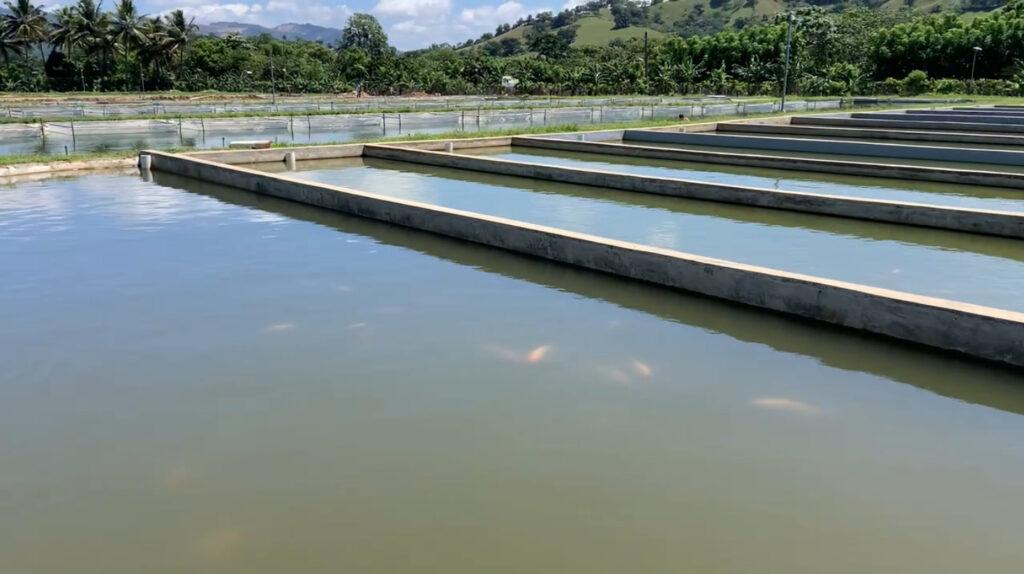
Choosing the right pond type is one of the most important decisions in catfish farming. Each pond has advantages and disadvantages depending on your budget, land availability, water source, and production goals.
Comparison Overview
| FeatureTarpaulin PondConcrete PondEarthen Pond | |||
| Initial Cost | Low | High | Moderate to High |
| Lifespan | 3–8 years | 20+ years | Long-term |
| Water Quality Control | Excellent | Excellent | Moderate |
| Growth Rate | Good | Very Good | Excellent |
| Natural Food Availability | Very Low | Low | High |
| Ease of Harvesting | Easy | Easy | Moderate |
| Disease Monitoring | Easy | Easy | More Difficult |
| Stocking Density | High | Very High | Moderate |
| Suitable for Small Space | Excellent | Excellent | Poor |
| Expansion Potential | Moderate | Moderate | Excellent |
Tarpaulin Pond
Advantages
- Lowest startup cost
- Quick to install
- Portable and movable
- Suitable for urban farming
- Easy to monitor fish
- Easy harvesting
- Requires little land
Disadvantages
- Short lifespan compared to concrete
- Can tear or leak
- Water temperature fluctuates rapidly
- Limited production scale
- Requires frequent water management
Best For
- Beginners
- Backyard farmers
- Demonstration farms
- Small-scale commercial production
Typical Stocking Density
- 150–300 fish per cubic meter
Concrete Pond
Advantages
- Durable and long-lasting
- Better biosecurity
- Easier disease control
- Supports high stocking densities
- Easy water management
- Easy sorting and harvesting
Disadvantages
- High construction cost
- Requires skilled construction
- Limited natural food production
- Water quality must be carefully managed
Best For
- Commercial production
- Hatcheries
- Nursery operations
- Intensive farming systems
Typical Stocking Density
- 200–500 fish per cubic meter
Earthen Pond
Advantages
- Most natural environment
- Lowest feeding cost per kilogram of fish
- Natural food organisms available
- Excellent fish growth
- Large-scale production possible
- Lower stress on fish
Disadvantages
- Requires more land
- Harvesting is more difficult
- Predators may attack fish
- Water quality harder to monitor
- Pond preparation required
Best For
- Commercial grow-out operations
- Large farms
- Integrated farming systems
Typical Stocking Density
- 5–20 fish per square meter
Growth Performance Comparison
Illustrative comparison only. Actual performance depends on feed, water quality, stocking density, and management.
Which Pond Produces the Cheapest Fish?
Earthen Pond
Usually produces the cheapest fish because:
- Natural food supplements feed intake
- Lower infrastructure costs per fish
- Lower energy requirements
- Better feed conversion under good management
Concrete Pond
Produces fish faster and more intensively but with higher investment costs.
Tarpaulin Pond
Useful for small-scale production but may have higher operating costs over time because of replacement and water management needs.
Which Pond Is Best?
Considering an integrated system of:
- BSF maggot production
- Catfish hatchery
- Nursery operations
- Grow-out ponds
- Poultry and piggery
A combination approach is often most profitable:
Concrete Ponds
Use for:
- Hatchery
- Fry production
- Fingerlings
- Nursery operations
Earthen Ponds
Use for:
- Grow-out to market size
- Large-scale production
- Lower production costs
Tarpaulin Ponds
Use for:
- Demonstration projects
- Emergency holding tanks
- Quarantine tanks
- Small experimental batches
Recommended Strategy
For serious commercial catfish farming:
Concrete pond → Fingerlings and juveniles
Earthen pond → Grow-out to table size
This combines:
- Better survival rates
- Faster early growth
- Lower finishing costs
- Higher overall profitability
Conclusion
There is no single "best" pond. The best pond depends on your goals:
- Tarpaulin Pond: Best for beginners and small spaces.
- Concrete Pond: Best for hatcheries and intensive commercial production.
- Earthen Pond: Best for large-scale grow-out and maximum profitability.
For most commercial farms, including integrated farms such as Noble Farms, a combination of concrete ponds for nursery operations and earthen ponds for grow-out production often provides the highest returns.