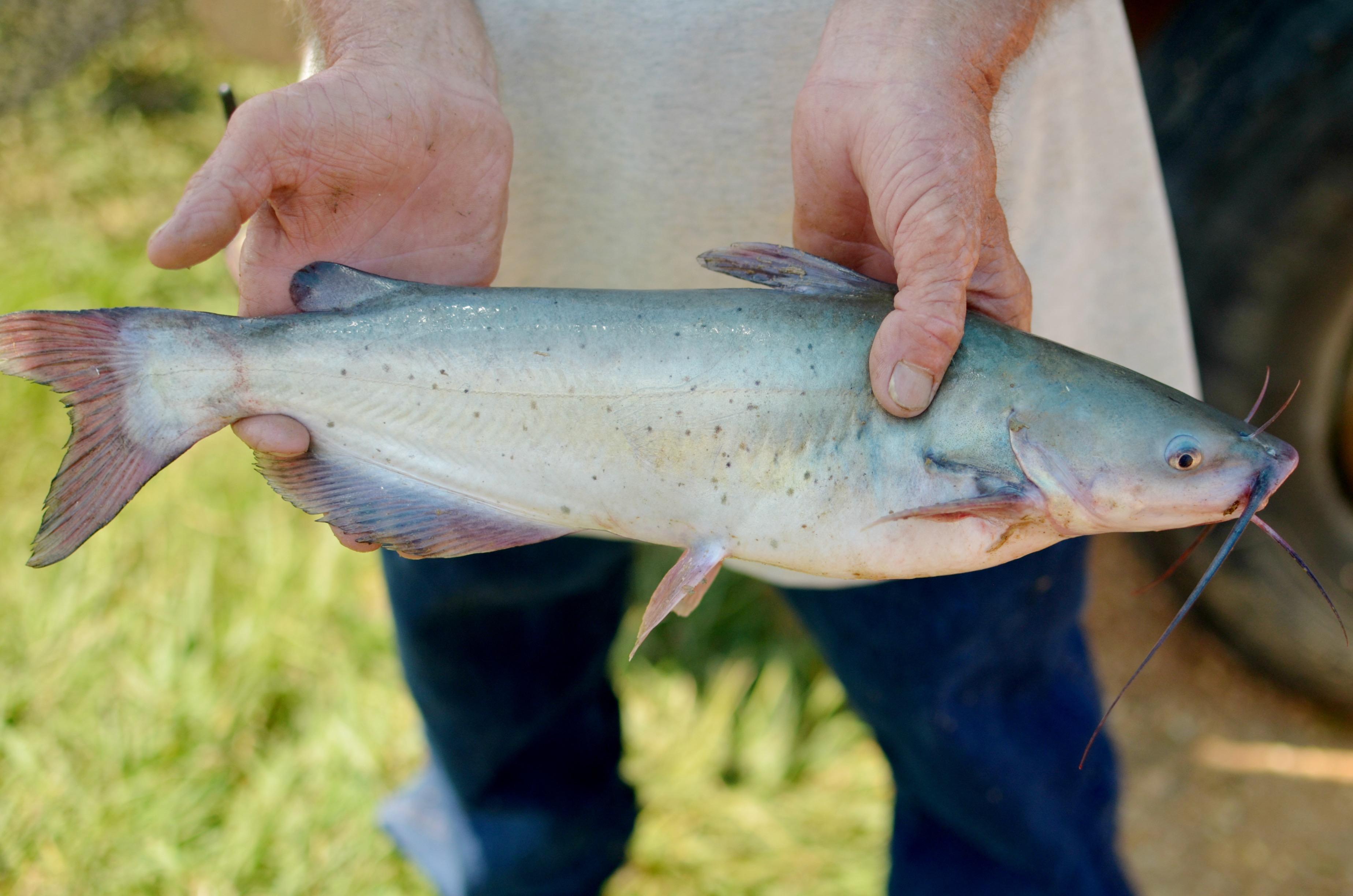
Proper feeding is the foundation of profitable catfish farming. Feed accounts for 60–80% of production costs, making feeding management one of the most important skills for a fish farmer. The goal is to provide enough nutrients for rapid growth while minimizing waste and maintaining good water quality.
As catfish grow, their feeding frequency decreases because larger fish have larger stomachs, lower metabolic rates, and can consume more feed at one time.
Stage 1: Fry
Age
- Newly hatched to 2 weeks
Feeding Frequency
- 4–6 times daily
Feed Type
- Artemia
- Zooplankton
- Powdered starter feed
- Fine crumble feed
Why Frequent Feeding?
Young fry have very small stomachs and require constant access to nutrients for rapid growth and survival.
Stage 2: Fingerlings
Size
- 2–20 grams
Feeding Frequency
- 3–4 times daily
Suggested Schedule
- 7:00 AM
- 11:00 AM
- 3:00 PM
- 6:00 PM
Protein Requirement
- 40–45%
Feeding Rate
- 5–10% of body weight daily
Example
If 1,000 fingerlings weigh an average of 10 g:
Total biomass:
1,000 × 10 g = 10 kg
At 8% feeding rate:
10 kg × 8% = 0.8 kg feed/day
Divide into 4 meals:
0.2 kg per feeding
Stage 3: Juveniles
Size
- 20–100 grams
Feeding Frequency
- 2–3 times daily
Suggested Schedule
- 8:00 AM
- 1:00 PM
- 6:00 PM
Protein Requirement
- 35–40%
Feeding Rate
- 4–6% of body weight daily
At this stage, fish are actively growing and require a balanced diet to maximize weight gain.
Stage 4: Growers
Size
- 100–500 grams
Feeding Frequency
- 2 times daily
Suggested Schedule
- 8:00 AM
- 5:00 PM
Protein Requirement
- 30–35%
Feeding Rate
- 3–4% of body weight daily
This stage is where most commercial catfish farmers focus on achieving efficient feed conversion and rapid growth.
Stage 5: Table-Size Catfish
Size
- 500 grams and above
Feeding Frequency
- 1–2 times daily
Suggested Schedule
- Morning (8:00 AM)
- Evening (5:00 PM)
Protein Requirement
- 28–32%
Feeding Rate
- 1.5–3% of body weight daily
At this stage, fish are approaching market size, and the emphasis shifts toward maintaining growth while controlling feed costs.
Feeding by Body Weight
| Fish StageFeed Rate (% Body Weight/Day) | |
| Fry | 10–15% |
| Fingerlings | 5–10% |
| Juveniles | 4–6% |
| Growers | 3–4% |
| Table Size | 1.5–3% |
How to Calculate Feed Quantity
Step 1: Determine Total Biomass
Number of fish × Average weight
Example:
2,000 fish × 250 g
= 500 kg biomass
Step 2: Determine Feeding Rate
At 3% body weight:
500 kg × 3%
= 15 kg feed/day
Step 3: Divide into Feedings
If feeding twice daily:
15 kg ÷ 2
= 7.5 kg per feeding
Best Times to Feed Catfish
The most effective feeding periods are:
- Early morning
- Late afternoon
- Early evening
Catfish are generally more active during cooler periods.
Avoid feeding during:
- Extremely hot afternoons
- Heavy storms
- Low oxygen conditions
- Immediately after handling or transportation
Feeding Catfish with BSF Maggots
Black Soldier Fly (BSF) larvae can be used as a cost-effective protein source.
Benefits
- High protein content
- Rich in essential amino acids
- Natural feed for fish
- Reduces commercial feed costs
- Supports sustainable farming
Recommended Inclusion Levels
| Fish StageBSF Inclusion | |
| Fingerlings | 5–10% |
| Juveniles | 10–20% |
| Growers | 20–40% |
| Table Size | 30–50% |
BSF larvae can be fed fresh, dried, or processed into fish feed pellets.
Signs of Proper Feeding
A well-fed catfish population will show:
- Uniform growth
- Active feeding response
- Low mortality
- Good body condition
- Efficient feed conversion
Signs of Underfeeding
- Slow growth
- Aggressive behavior
- Cannibalism
- Stunted fish
- Uneven sizes
Signs of Overfeeding
- Uneaten feed remains in water
- Water becomes cloudy
- Bad odors develop
- Increased disease outbreaks
- Higher production costs
Feeding Management Tips
- Feed at the same time every day.
- Use quality feed appropriate for fish size.
- Weigh sample fish every 2–4 weeks.
- Adjust feeding rates as fish grow.
- Monitor water quality regularly.
- Remove uneaten feed when possible.
- Keep accurate feeding records.
- Supplement with BSF larvae to reduce feed costs.
- Avoid sudden feed changes.
- Observe fish behavior during every feeding.
Conclusion
Catfish should be fed frequently when young and less frequently as they grow. A practical rule is:
- Fry: 4–6 times daily
- Fingerlings: 3–4 times daily
- Juveniles: 2–3 times daily
- Growers: 2 times daily
- Table-size fish: 1–2 times daily